
With the ushering in of William III in 1688 and the introduction of the Bill of Rights, there was a noticeable power shift away from the Crown amd towards the new joint-stock companies and merchants in England. While cemented with the new Bill, this shift had been happening slowly but surely for some time, with merchants maneuvering themselves into positions of power. Among the most powerful of these was Bristol’s Edward Colston.
At the beginning of the century, companies had been a means for the crown and those close to the crown to hold a monopoly on profitable trade with England’s colonies; such as trade with Africa through the Royal Africa Company (RAC), in which Edward Colston played an increasingly major role.
However as the century progressed and the merchants became richer, those holding shares in such companies began to think less about promoting the interests of the crown and more about holding onto and increasing their own profits. Through the parliament of the early 1600’s, these merchants began to shape the rules around joint-stock companies to favour the shareholders rather than the coffers of the crown. This included selling shares to merchants not so loyal to the crown who were instead loyal to profit. Some of these new merchants were young men, supporters of the Whig party as opposed to the more royalist Tory (different from the current Tory party of the UK who confusingly are arguably closer to Whigs in policy).
This was dangerous for the crown as it further shifted the power and profits away from its hands. In response the crown sought to disrupt this accumulation of power and money by merchants by effectively halting parliament for nearly a decade. In this time parliament was reshuffled and the “publicly” elected members of parliament – those more faithful to profit – were replaced so that parliament was once more loyal to the crown. This was seen as a gross act against democracy by many and merchants became worried that their accumulated wealth and influence was at risk, and rightly so.
It was this “Loyal Parliament” that James II inherited upon his fathers death in 1685. At this time James II, previously the Duke of York, had been the governor of the RAC for 16 years and had strong ties with the merchants of London, which had included Edward Colstons father. James II, then Prince Rupert, had been acting as fixer and enforcer for the company, protecting its interests and its profits for the shareholders, leaving the running of the company to assistants like Edward Colston. Wielding more power than their position suggests, these assistants had been greatly enriching themselves before the restrictions imposed by James II’s father but now that their governor had become king they presumed a return to normality. However after his ascension to the throne, instead of relaxing the laws James II maintained his fathers constriction of corporate power, tipping his previously loyal base towards finding other means of wrestling back power and more importantly profit from the crown.
Throughout all of this there was an undercurrent of religious unease. England in the 1600’s was staunchly Anglican following the creation of the Church of England by Henry VIII, an attempt to wrestle power away from the Catholics in Rome. James’ father King Charles II had long been rumoured to have been Roman Catholic but preached a code of religious tolerance, however James himself was outright Catholic, seeking to curb Anglican practice in England during his reign. This further alienated him from the merchants and people of England, yet his lack of a male heir was seen as a sign that there was nothing to worry about. Without a male heir James’ daughter Mary, who had been raised to be Anglican, was set to take the throne and it was she who was married to the Dutch Stadtholder, William of Orange. However in June of 1688 James II had a son. The son would be raised a Catholic and because he was male, take the throne instead of Mary.
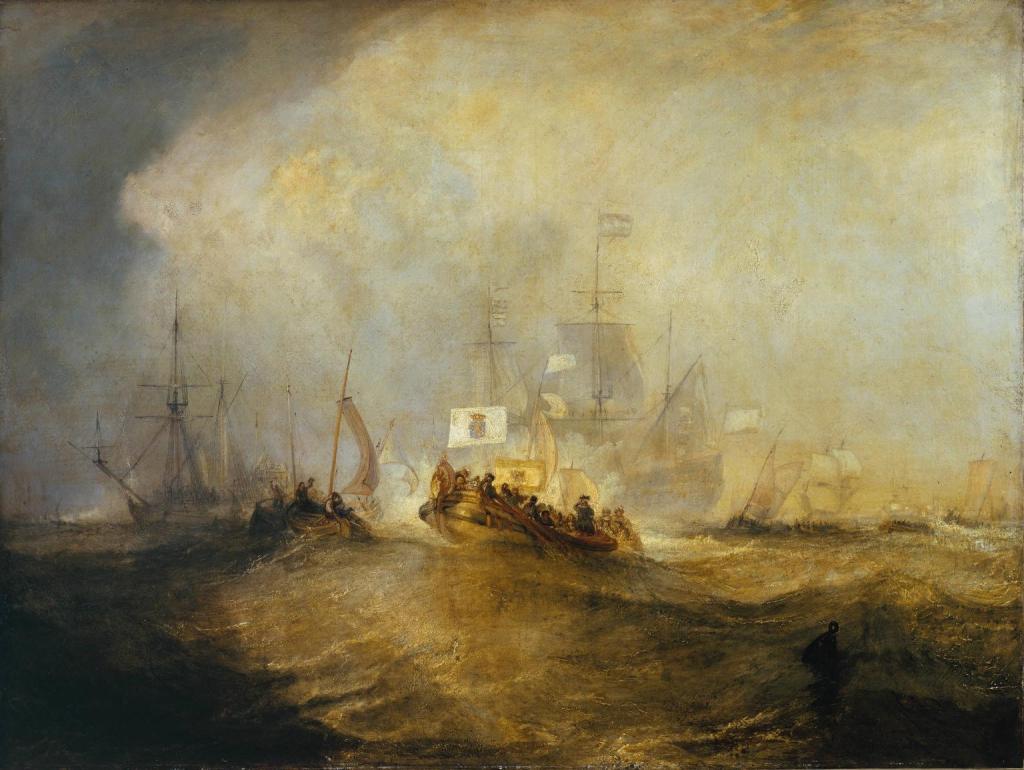
Embarked from Holland, and Landed at Torbay,
November 4th, 1688, after a Stormy Passage
Together, the affront on mercantile interests and profit at home as well as the prospect of a Catholic dynasty caused members of England’s upper classes to panic. They reached out to the Anglican Mary and her husband William of Orange. The pair were offered the English throne in return for signing a bill that would curb the powers of the crown and hand more power to the people through parliament, especially when it came to the dividing of colonial interests. Royal revenue even became so-called public revenue, which looked like a financial gain for the general public as they could take back control of their own taxes through a more powerful parliament. But while looking like a win for the people of England and their Anglican religion, the bill in fact handed more power to the oligarchs already at the top of England’s upper class who had already been enriching themselves through royal companies for the best part of the century. This new bill gave them and their companies greater protections when it came to property and profit and made it easier for individuals to amass wealth and power. Under the guise of power-to-the-people, the ability to freely use public funds like taxes were also given to parliament. Now, instead of the crown running the monopolies, parliament and the people, the oligarchical merchants who elected the MPs would have the power.
The change in attitude to property is most easily seen through two lawsuits that occurred just four years apart, highlighted by Steven Pincus in his book 1688: The First Modern Revolution.
In 1685 the East India Company accused Thomas Sandys of trading in their territory without a licence. Seen as a sovereign entity, the East India Company was an arm of the crown and trading without a licence in its jurisdiction was seen as stealing from the crown itself. Sandys defence was that
“the king cannot by his patent letters take away the subject’s property, and I do not know a greater property than freedom of trade and labour”.
He argued that it was his right to earn a living and what he earned through that was his to keep. The crown should not be able to interfere in what he saw as his independent rights as a man and as a merchant.
The Court rejected this liberal definition of property and sided with the East India Company.
However just four years later in 1689 after the ascension of William and Mary, Nightingale v. Bridges saw merchants whose vessels had been seized by the Royal Africa Company for trading in their territory receive compensation for their seized goods. The merchants argued that the ships and cargoes were their property and only an act of parliament could alter the conditions of what property was or is. They said that because the act of trading in those waters was legal before a royal charter was granted to the Royal Africa Company, “the king cannot by any prerogative whatsoever, create either a new cause or a new mode of seizure” as it was never actually ratified by parliament.
With the Bill of Rights, parliament now had the power to overrule the crown, especially when it came to the rights of the individual merchant and their profits against the previously “sovereign powers”.
The signing of the bill of rights and the increased powers of parliament now heralded a new nationalism within the English people. The public, with the view that through an elected parliament, with little influence from the crown, their taxes would be spent more wisely became happier to pay higher rates of tax. Unfortunately this just gave the merchants of London more revenue to play with and they didn’t hesitate to do so. On the back of this public revenue long term loans were made and borrowing increased, safe in the knowledge that because “parliament had a longer time horizon than any individual king” and was not subject to regime change it would be able to pay back any debts in the future, no matter how far ahead and no matter who was in power.
Previously borrowing had either been from individual private lenders or from the crown, meaning that sums usually had to be paid back within a lifetime in case of death or a change in monarchy. But now debt could be drawn from the public for as long as there was a taxable populace there would be revenue.
This revenue extracted from the public under the guise of political freedom was used to back the merchants’ chase for profit. Due to the new ease of securing funding increasingly unstable business practices became the norm. While enriching the merchants these practices drew unnecessarily on the new funds available to them pushing the public’s debt upwards. Public debt was a new almost unlimited fund for these merchants. Previously, the crowns debts – and the ability to repay – would be linked with the life of the reigning monarch. Now however the public, who weren’t going anywhere as a body could be liable for debts well beyond the average lifespan.
The changes made in 1688 ripple through to us today in the form of an ever increasing national debt. While it has allowed the UK to surpass other countries in military might (borrowing was arguably the only reason Nelson beat Napoleon at Waterloo) and has allowed monetary injection in difficult times, the overall outcome is quite unsettling. In 1694 the Bank of England was created to preside over this rising national debt and provide the funding for it, all the while using the British public as collateral.
At the time of the Glorious Revolution and the installation of Mary and William, England’s national debt was around £1 million. Within thirty years it had risen to £48 million. At the end of 2020 it stands at £1,877 billion.
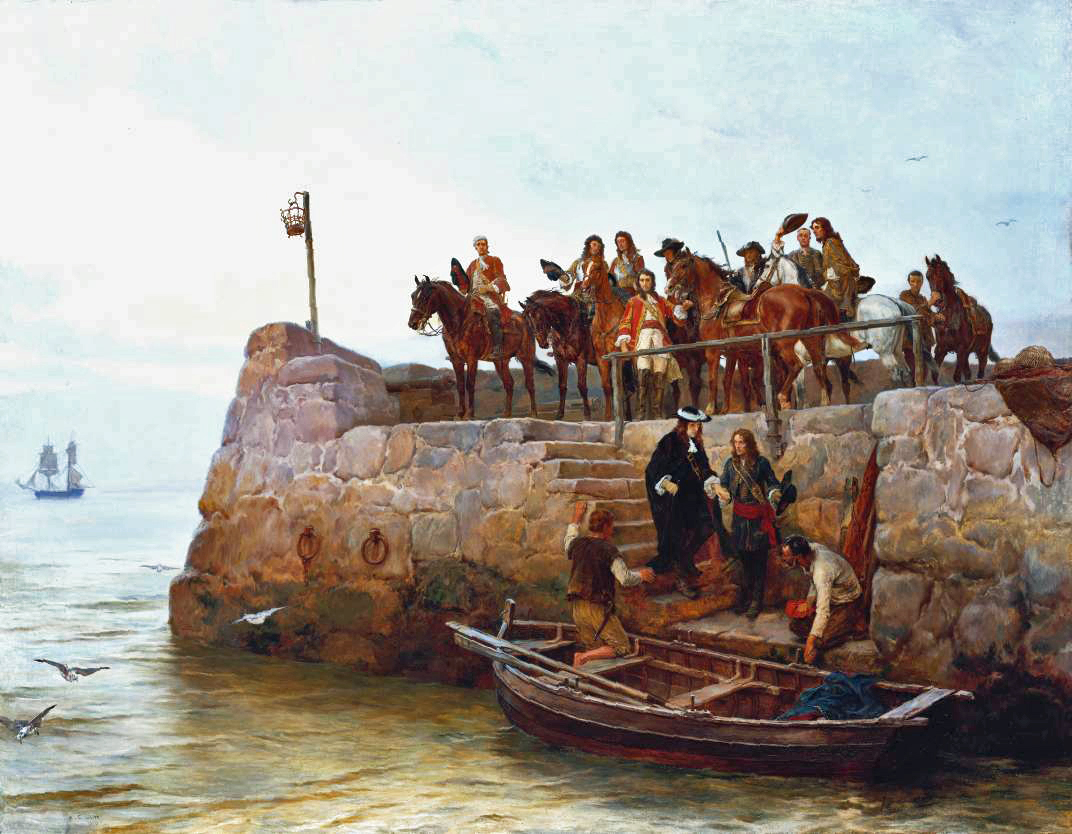
http://www.tate.org.uk/art/work/N01530
In the decades leading up to the Glorious Revolution, slavery had remained one of the largest profit-making businesses for the crown and its merchants. But now that parliament and the merchants of England could trade even more freely and more importantly borrow money at will the trade boomed. The British-controlled island of Jamaica was long seen as a possible supply point of black slaves to the Spanish plantations around the Carribean. Being a profitable market, the crown had wanted to monopolise on this but before they could appoint a governor to the island, a small group of elite merchants on the island got together to create a contract with the Spanish. They sold slaves at a 35% mark up to the Spanish, £40 instead of £17, seeing the selling of humans as a far easier way to make money than selling other products. As one merchant was quoted as saying, “35 per cent trade is a much easier way of making money than making sugar”.
Further profitable deals with the Spanish had been made, mainly through the crown-backed RAC. But now the newly emboldened private merchants were starting to encroach on the declining crown-backed companies. In June 1689 Edward Colston, the head of the Royal Africa Company, was given the task of making a deal with the Spanish government for the sale of African slaves to their colonies. Aided by his previous experience in trading human lives as well as his connections from his trade with southern Spain, Colston was able to almost single-handedly set up trade between England, the West Coast of Africa and the Spanish Colonies in the Caribbean, swapping stolen human souls for Spanish gold. The deal was called the “Assiento for Negroes” and brought Spain into Britain’s triangular trade.
After William of Orange & Mary’s arrival in Britain in 1688, Edward Colston began to move away from the crown-created RAC, investing more in the line of private business that was now more profitable thanks to the new powers of government. His departure from the Royal Africa Company brought an end to the company’s most profitable and active period but it was by no means the end of his invovement in the slave trade. There is substantial evidence to show that at the time of his retirement to his Mortlake estate, Edward Colston had set himself up as a prominent merchant banker. As a financier he used his experience to provide funding and knowledge for new ventures and old trades, including the continued slavery of Africans under the guise of “Christian charity”. A guise some still don to this day.
Edward Colston’s career as a merchant was far darker than many children in his home city of Bristol were taught. His name, once given to many prominent buildings and institutions across the city from schools to music halls is now removed and secreted away. Whether this is the right thing to do in the absence of any apology or attempt at redressing is an open question. His statue, famoulsy torn down and thrown into the harbour now resides in the museum atop Park Street. Bristol’s museum is situated next to the imposing tower of the Wills Memorial; a building dedicated to another prominent merchant and his family who made their fortune in tobacco, an industry heavily reliant on the labour of African slaves. Arguably Edward Colston paved an already trodden track towards industrialised slave trade, setting in motion laws and precedents that we still live under today. In the modern day, the British public are still the collateral on which the Bank of England makes its bets and it is the British public that pays out when these bets turn bad. The Edward Colstons of the modern day still make their fortues using the same legal precedents and framework that he and his friends ushered in some 300 years ago. Profit and power are still the end goal for many of those ruling Britain. It is up to the public to decide if they want to stay as the debtors for their bets.
 The Clueless Conscience
2 thoughts on “Colston (Pt. III)- Cronyism & Capitalism”